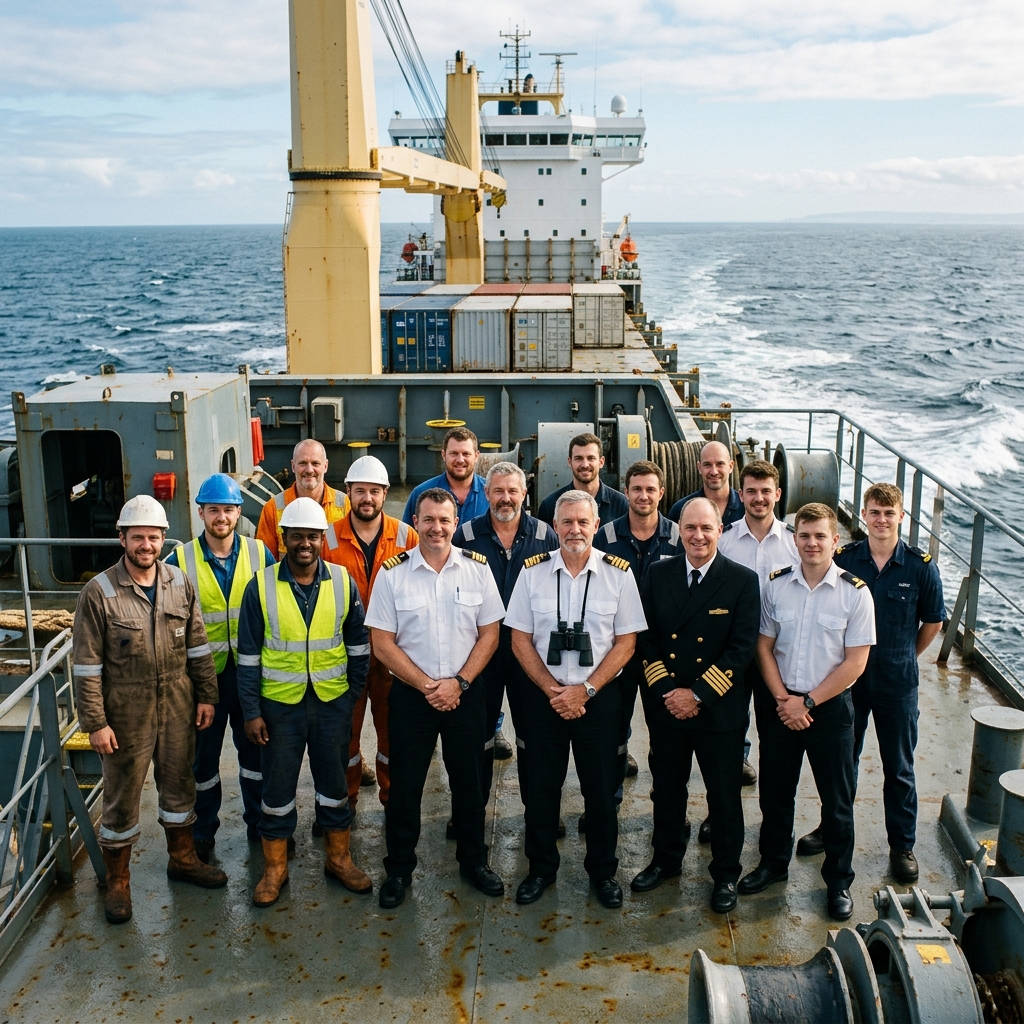

The Merchant Navy Career Path: From Cadet to Master or Chief Engineer
What the progression actually looks like, how long each stage really takes, what it pays, and the decisions early in a career that determine how far it goes.
The merchant navy is one of the few careers left where the path from entry to command is genuinely defined. Not easy, and not fast — but defined. You know at cadet stage which certificates stand between you and the corner cabin, and roughly how much sea time each one requires.
What is less well explained is how long the stages really take in practice, and which early decisions quietly determine the ceiling.
Two departments, two ladders
The deck department navigates the vessel and handles the cargo, progressing Third Officer to Second Officer to Chief Officer to Master. The engine department runs the machinery, progressing Fourth Engineer to Third to Second to Chief Engineer. Electro-technical officers form a third, narrower track.
The choice is generally made before training and is difficult to reverse afterwards, since the certification is entirely separate. It is worth taking seriously rather than defaulting to whichever course had a seat available.
Realistic timelines
| Stage | Sea time typically required | Realistic elapsed time |
|---|---|---|
| Cadet to Third Officer / Fourth Engineer | 12–18 months cadetship | 2–3 years from course start |
| Third to Second Officer | 12 months in rank | 1.5–2 years |
| Second to Chief Officer | 18–24 months in rank | 2.5–3.5 years |
| Chief Officer to Master | 24–36 months in rank | 3–5 years |
| Fourth to Second Engineer | 24–30 months combined | 3–4 years |
| Second to Chief Engineer | 18–24 months in rank | 2.5–4 years |
Elapsed time exceeds sea time because of leave periods, examination preparation and the gaps between contracts. Command at 32 to 38 is a common outcome for someone who progresses without interruption. Faster happens; it usually means very little leave.
The decisions that actually matter
Vessel type, earlier than you think
Sea time is not fungible in the eyes of the market. Tanker experience with valid endorsements opens tanker berths, which pay more and are harder to enter later. Gas carrier experience is more valuable still and more difficult to obtain without prior tanker background. An officer who spends eight years exclusively on general cargo will find the gas and chemical sectors substantially closed by the time they want in.
If you have any ambition toward the better-paying sectors, get the endorsement and the vessel-type time early, while the switching cost is low.
Not letting certificates drift
Every seafarer who has lost a contract to an expired module has learned this the expensive way. Refreshers booked three months before expiry cost the same as refreshers booked in the last week, and cause none of the disruption.
Choosing employers on reliability, not headline wage
Early in a career the wage difference between operators is small; the difference in whether they pay on time, honour relief dates and document your sea time properly is large. Sea time recorded incorrectly is sea time you may have to argue for at your next examination.
Your sea service record is the only asset in this career that compounds. Protect the accuracy of it above almost everything else.
What it pays
Wages vary by vessel type, flag, trading pattern and operator, and any figure quoted publicly should be treated as indicative. Broadly, the pattern is that gas and chemical tankers pay above product tankers, which pay above container vessels and bulk carriers, with offshore and cruise operating on their own logic. Senior ranks on gas carriers sit at the top of the merchant navy scale.
The more useful observation is structural: the wage gradient between ranks is steep, so time spent stalled at a rank is expensive in a way that is easy to underestimate. Two years of drift between Second and Chief Officer costs considerably more than the immediate wage difference suggests, because it delays every subsequent step too.
Life ashore afterwards
Most seafarers eventually come ashore, and sea-going experience translates well: technical superintendent, marine superintendent, port captain, surveyor, class society, vetting inspector, crewing manager, maritime lawyer with a sea background, training institute instructor.
Almost all of those roles prefer candidates who reached senior rank. The officer who came ashore as a Second Officer has fewer options than the one who came ashore as a Master, which is a further argument against drifting.
Being realistic about the cost
This career asks for something specific: months away from home, missed events that do not come round again, and long periods of routine punctuated by genuine responsibility. It pays well, it is genuinely skilled, and the progression is real. But the people who last are the ones who understood the trade they were making rather than the ones who were sold a brochure.
Anyone recruiting you should be honest about that. If the conversation is entirely about earnings and travel, with nothing about separation from family, you are being sold something rather than advised.